

Arizona's private client law firm
Scottsdale estate planning and tax attorneys
Boland Law Group, PLLC advises families of significant wealth, senior executives and the owners of closely held businesses on estate planning, trusts, wealth transfer tax, business succession and IRS controversy. Two generations of LL.M. tax attorneys design every plan, draft it themselves, and are admitted to defend it in the U.S. Tax Court.
North Scottsdale at sunset
- Best Lawyers in AmericaLawyer of the Year, Trusts and Estates, Scottsdale, 2027
- Best Law Firms in AmericaRanked 2024, 2025 and 2026
- Martindale-HubbellAV Preeminent, the highest peer review rating
- AdmissionsU.S. Tax Court, Supreme Court of Arizona, U.S. District Court for Arizona
Six things, done at the highest level
Every matter is an estate, trust, tax or closely held business matter, and every one is led by an attorney holding a post-doctoral LL.M. We do not practice personal injury, criminal defense, immigration, family law or general commercial litigation. The depth is a direct consequence of the narrowness.
Estate planning
A complete plan for a substantial estate: revocable trust, pour-over will, powers of attorney, healthcare directives and the funding that makes it work, then the wealth transfer tax strategy and charitable vehicles that matter above the exemption. Plans are drawn to anticipate tax law before it changes and to settle family questions before they become disputes.
Estate planning in ArizonaTrust planning and modification
Advanced trust design for new wealth, and modernization of existing instruments through amendment, restatement, reformation, decanting and nonjudicial settlement, so that a trust drafted twenty years ago serves today's family, today's tax code and today's assets.
Trust planning and modificationTrust administration
Counsel for trustees and beneficiaries from first notice to final distribution: fiduciary duties, notices, accountings, allocations to sub-trusts and distributions. Trustees carry real liability and beneficiaries carry expectations shaped by grief; both are guided with rigor and discretion.
Trust administrationBusiness succession planning
Most owners exit a business once. Transitions are planned years before they happen: buy-sell agreements, entity structure, pre-sale trust and gifting strategy, and deal structure with the after-tax number in view, so the business and the family behind it survive the handoff.
Business exits and liquidity eventsBusiness and corporate law
Standing counsel to closely held companies whose owners are also our private clients: formation and entity structuring, contract drafting and review, governance and compliance, and mergers and acquisitions. Every corporate decision is made with the owner's personal balance sheet, tax posture and succession plan in view.
Outside general counselTax controversy and litigation
Representation in IRS audits, administrative appeals and litigation, including the U.S. Tax Court, with particular depth in TEFRA and CPAR partnership matters. The early decisions in an examination determine the outcome, and the counsel who drew the structure is the counsel who defends it.
Tax controversy and litigationDrafted in-house, by name
The advanced planning vocabulary, in plain English. Each of these is designed, drafted and, where the IRS disagrees, defended by the same LL.M. counsel.
- Spousal lifetime access trustsThe exemption used during life, with indirect access preserved through a spouse.
- Dynasty trustsWealth held outside the taxable estates of children and grandchildren, for generations.
- Grantor retained annuity trustsGrowth above a hurdle rate passes to the next generation at little or no gift tax cost.
- Irrevocable life insurance trustsDeath benefits kept outside the gross estate, with Crummey administration done properly.
- Installment sales to grantor trustsA value freeze: the asset's future growth shifts out of the estate in exchange for a note.
- Qualified personal residence trustsA home or legacy property transferred at a discount while you continue to live in it.
- Beneficiary defective trustsBDIT and BDOT designs, where the beneficiary rather than the grantor owns the trust for tax purposes.
- Charitable remainder and lead trustsPhilanthropy structured with retained interests, income streams and transfer tax leverage.
- Family LLCs and partnershipsManagement, governance and orderly transfer for family businesses and investment assets.
- Qualified small business stockSection 1202 gain exclusion, planned before the sale rather than discovered after it.
- Decanting and nonjudicial settlementAn existing trust poured into a better one, or modified by agreement, without a courtroom.
- Form 706 and portabilityA deceased spouse's unused exemption captured by election rather than lost by silence.
Seven kinds of client, one standard of care
We limit client volume deliberately. These are the people the practice is built for, in Scottsdale and across Arizona.
- Multi-generational families
Dynasty and generation-skipping trusts, transfer strategies and family governance for wealth meant to outlast the people who made it.
- Business owners
The company and the owner, advised together: entity structure, buy-sell agreements and an estate plan built around the business.
- Senior executives
Tax and estate planning around RSUs, options, concentrated stock and deferred compensation.
- Business exit and liquidity events
Pre-sale trust and gifting strategy, deal structure with the after-tax number in view, and the plan for the day after closing.
- Outside general counsel
Contracts, governance, compliance and transactions on a standing basis for companies without a general counsel.
- Family offices
Trust design and administration, entity and governance work, and charitable vehicles for single-family offices.
- Planning in retirement
Retirement accounts and IRAs, incapacity and healthcare directives, and refreshing a plan written for a different life.
Most estate plans are assembled. Yours is drawn.
A partner scopes the matter and a partner drafts it. The name on your engagement letter is the name in the room.
One partner holding the LL.M. carries the file from the first meeting to the execution of documents. Your family's personal, financial and business details stay with the attorney who designed the structure, and that attorney is admitted to defend it.
That last point is the difference between a plan and a defensible plan. Admission to the U.S. Tax Court means the counsel who designed your estate plan, structured your entities and coordinated your wealth transfer strategy is qualified to represent you if the IRS challenges any of those positions. Work product built by someone who has had to defend one is built differently.
The continuity runs the other way too. Many of our client relationships began with the wealth creators and now continue with their children and grandchildren. We hold the reasoning behind every structure and the family context that shaped each choice.
The record
- LL.M. in TaxationUniversity of Missouri-Kansas City School of Law
- LL.M. in Estate Planning and Elder LawWestern New England University School of Law
- Supreme Court of ArizonaAdmitted
- United States Tax CourtAdmitted
- United States District Court, District of ArizonaAdmitted
- State Bar of ArizonaTax Law Section Executive Council; Probate & Trust and Business Law Sections
- Central Arizona Estate Planning Council, Scottsdale Bar Association, Arizona Bar FoundationMember
Two generations of the same practice
Founded by Robert W. Boland, Jr. and led by the Boland family since its inception, with each attorney holding an LL.M. and practicing exclusively in estate planning, trust law, wealth transfer taxation, tax controversy and closely held business planning.

Robert W. Boland, Jr., J.D., LL.M.
Founding and Managing Partner, TaxRob founded the firm and has led it since. He practices tax planning, business planning and tax representation, and has represented clients in the U.S. Tax Court with particular emphasis on TEFRA and CPAR family limited partnership audits and litigation. Alongside the business practice he built one of the most respected estate planning practices in the greater Scottsdale area, advising high net worth families on estate planning and complex tax matters.
Licensed since 1974, he holds his Juris Doctor and LL.M. in Taxation from the University of Missouri-Kansas City, where he later taught as an adjunct professor in the Tax LL.M. program. He began his career inside the Internal Revenue Service and at Grant Thornton, co-founded the Kansas City tax firm Boland, McQuain, Block, DeHardt & Rosenbloom, and served as chairman and president of a national bank holding company and chief executive of a national bank for over eight years. Before any of it, he served in the U.S. Army as a Green Beret during the Vietnam War.
- Martindale-Hubbell AV Preeminent peer review rating
- Who's Who in American Law
- Best Lawyers in the United States, Expert Witnesses
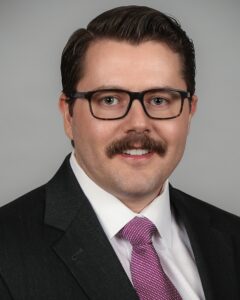
Grant M. Boland, J.D., LL.M.
Tax and Estate Planning PartnerGrant's practice is the strategic design, implementation and defense of strategies for transferring ownership of family businesses and legacy properties to succeeding generations or to charitable organizations, with an emphasis on estate plans that protect and maximize wealth while minimizing transfer taxes. He integrates the business strategy with the personal estate plan so that the two are one plan rather than two files that never meet, and, like his father, brings federal tax litigation experience to the planning table.
He joined the firm in 2006 and holds his Juris Doctor from Phoenix School of Law and his LL.M. in Estate Planning and Elder Law from Western New England University School of Law, after a Bachelor of Interdisciplinary Studies from Arizona State University. He serves on the State Bar of Arizona Tax Law Section Executive Council and is a member of the Central Arizona Estate Planning Council and the Scottsdale Bar Association.
- Best Lawyers in America, Lawyer of the Year, Trusts and Estates, Scottsdale, 2027
- Best Lawyers in America, Tax Law and Trusts and Estates, 2024 through 2027
- Super Lawyers Rising Star, 2021, 2022 and 2023
- Top 50 Pro Bono Attorneys, Arizona Foundation for Legal Services & Education, 2018
We do not believe in advertising superlatives. We believe in documented depth.
The full record: admissions, memberships, recognition and community workBy invitation, in four steps
We limit our client volume deliberately, so the first conversation is unhurried and a partner, not an intake department, decides whether we are the right counsel for your circumstances.
Most of the people we serve already have a financial planner, a CPA, an investment advisor, an insurance agent and sometimes a family office manager. We work in tandem with them. If you are one of those advisers, the office is the right first call, and the attorney on the matter will speak with you directly.
Call the office
A partner scopes the matter. The name on your engagement letter is the name in the room.
The first conversation
Unhurried, and about your family, your assets and what you want to happen, at the office in Scottsdale or at your home.
The questionnaire, by private invitation
If we are the right counsel for your circumstances, our planning questionnaire follows by personal invitation once the consultation is scheduled.
The engagement letter
No engagement is formed unless and until a written engagement letter is executed. From that point, one partner holds the file to signing.
Three situations we see every year
Hypothetical illustrations, drawn from the firm's published Arizona guide. Not client-specific.
Protecting both sets of children
A second marriage, children on each side. A plain survivor's trust would let the survivor amend the plan after the first death and disinherit one side entirely. A blended-family A/B design locks the deceased spouse's share at the first death: the survivor is provided for, and both sets of children are protected by the document rather than by hope.
Life insurance counts
A couple believed they were worth $3.5 million. A $2.5 million life insurance death benefit they owned brought the gross estate to $6 million, because the Internal Revenue Code measures everything you own or control at death, not your net worth. The tier, the architecture and the design questions all follow the gross estate.
Above the exemption line
A gross estate just over $15 million, including a closely held business and survivorship life insurance, with grandchildren in the picture. The GST exemption cannot be ported between spouses; it is allocated in life, captured at the first death, or lost. Generation-skipping sub-trust architecture, an insurance trust and a family LLC do the work.
Each situation is a composite for illustration. Your facts decide the design, and the engagement letter defines the work.
Scottsdale by appointment, and the rest of Arizona at your home
The office sits on the border of Scottsdale and Phoenix. We serve Scottsdale, Paradise Valley, Phoenix, Chandler, Gilbert, Mesa and Tempe from it, and travel for in-home appointments in the East Valley and in Prescott, the Verde Valley and Sedona.
- Community property
Arizona is a community property state, and at the first death both halves of community property receive a basis step-up. That single fact shapes trust architecture here in ways out-of-state templates miss.
- No state death taxes
Arizona has no state estate tax, inheritance tax or gift tax. Planning here is about the federal exemption, income tax basis and family design, not a state levy.
- Beneficiary deeds
Arizona recognizes transfer-on-death deeds for real property. Useful in the right place, and no substitute for a funded trust in the wrong one.
- Small estate limits
Under HB 2116, effective September 26, 2025, affidavits can transfer up to $200,000 of personal property and $300,000 of Arizona real property, net of liens, without probate. Above those limits, a funded trust keeps the estate out of court.
Hours
Monday through Thursday, 9am to 5pm
Saturday by appointment
Office visits by appointment only
In-home appointments
Chandler, Gilbert and Tempe
Prescott, Prescott Valley, Clarkdale, Jerome and Sedona
How to arrange one
Questions people ask first
-
Do I need a trust or a will in Arizona?
For most families with a home and retirement accounts, a funded revocable trust. In Arizona a will does not avoid probate; it only directs how assets move through the court, a public process that commonly runs six to twelve months. A properly funded trust keeps the estate private and out of court.
-
Does Arizona have an estate tax?
No. Arizona has no state estate tax, inheritance tax or gift tax. The federal estate, gift and generation-skipping transfer exemption is $15 million per person and $30 million for a married couple in 2026, indexed for inflation, and transfers above it are taxed at 40 percent. Families near that line plan differently.
-
Is my life insurance part of my estate?
Usually, yes. If you own the policy, the death benefit, not the cash value, counts toward your gross estate, which is the measure the Internal Revenue Code actually uses. Many families who think of themselves as comfortably under the exemption are closer to it than they realize once insurance and retirement accounts are counted.
-
What does community property change?
Arizona's community property rules can change the document count and the design. At the first death, both halves of community property receive a step-up in income tax basis, which affects how marital shares are structured and which assets a plan holds where. Templates written for other states routinely miss this.
-
Who will actually draft my plan?
A partner holding an LL.M. From the first meeting to the execution of documents, the attorney who designed the structure drafts it and keeps your family's details. No document service, and no hand-off to an associate you have not met.
-
Do you handle IRS audits and Tax Court?
Yes. Both partners are admitted to the U.S. Tax Court and bring federal tax litigation experience, with particular emphasis on TEFRA and CPAR partnership matters, to the planning table. The counsel who designs a structure is qualified to defend it.
-
When should an existing trust be updated?
When the law moves or the family does. The 2025 tax act reset the exemption at $15 million per person, and marriages, sales, moves and new grandchildren all change the right design. Minor changes are handled by amendment; anything structural is done by restatement, which is the standard of care.
-
How does an engagement begin?
With a call to the office. A partner scopes the matter, the first conversation is unhurried, and if we are the right counsel for your circumstances our planning questionnaire follows by private invitation. No engagement is formed until a written engagement letter is executed.
-
Do you work alongside our other advisers?
Yes. Most of the people we serve already have a financial planner, a CPA, an investment advisor, an insurance agent and sometimes a family office manager, and we work in tandem with them. If you are one of those advisers, the office is the right first call; the attorney on the matter will speak with you directly.
-
Do you come to Prescott or Sedona?
Yes, by in-home appointment. The Scottsdale office sees clients by appointment, and we travel to Chandler, Gilbert and Tempe, and to Prescott, Prescott Valley, Clarkdale, Jerome and Sedona.
What we have written down
Long-form guides by Grant M. Boland, J.D., LL.M., on the planning questions the 2025 tax law raised.
- Spousal lifetime access trusts: estate tax and basis planningSLATs
- Dynasty trusts: step-up in basis, estate tax changes and generational wealth transferDynasty trusts
- Tax planning under IRC section 1202 after the One Big Beautiful Bill ActQualified small business stock
- Beneficiary defective inheritor's trusts and beneficiary deemed owner trusts, comparedAdvanced trusts
This page is provided for general information and does not constitute legal or tax advice, nor does it create an attorney-client relationship. Descriptions of our practice are general in nature and are not a promise or guarantee of any particular result. The situations described are hypothetical composites for illustration and are not client-specific. Professional recognitions are listed with the awarding organization and year. No engagement is formed unless and until a written engagement letter is executed and any required fees are paid and cleared.